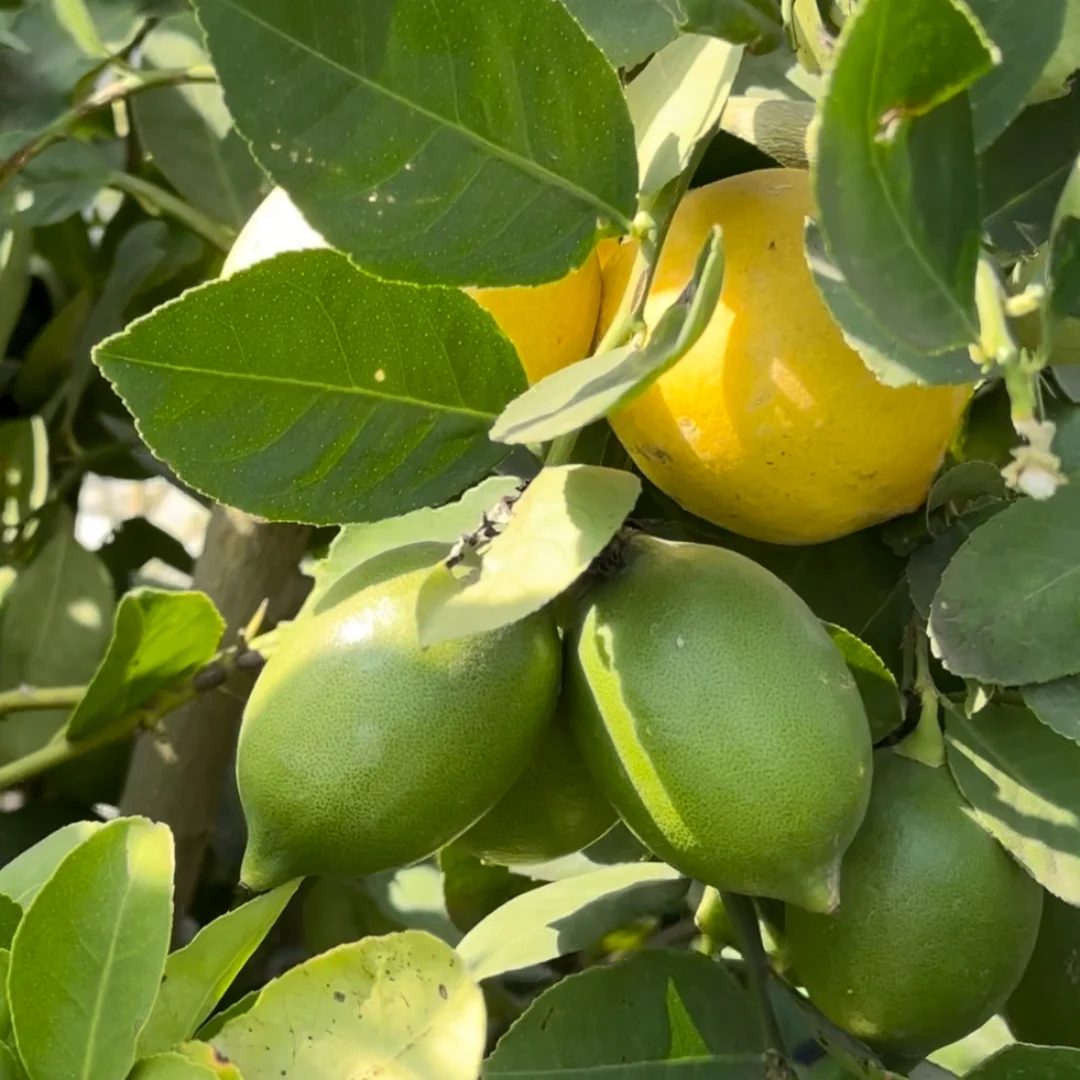
Lamas Care Protocol
Botanical: Citrus × aurantiifolia / Citrus limon · Mature orchard height: 10-15 ft
6–8 hours of direct sunlight (ideal for balconies, terraces & gardens)
5.5 – 7.0 (fast-draining, fertile sandy loam)
Regular watering; keep lightly moist during flowering and fruiting
14–18 inch pot (excellent container fruit plant) or ground
18°C – 38°C
12–18 months (all-season / Baramasi varieties fruit multiple times a year)
Beginner · Container Setup, Sunlight & Watering
The easiest fruit sapling for home balconies, terraces, and kitchen gardens.
1. Unbox & 3-Day Shade Rest
Water lightly on arrival and keep in bright indirect light for 3 days before moving to your sunniest spot.
2. Balcony-Friendly Potting Mix
Mix 45% garden soil + 30% vermicompost/cow dung manure + 20% sand/perlite + 5% neem cake. Place broken clay pot shards over drainage holes.
3. Maximum Direct Sunlight
Place where the plant receives at least 6 hours of direct sun. Kolkata Pati, Eureka, and Baramasi lemons flower year-round when given full sun.
4. Careful Handling Around Thorns
Wear gardening gloves while repotting and tie the main stem loosely to a stake.
Advanced · Year-Round (Baramasi) Flowering & Canker Care
Keep all-season limes and lemons flushing and fruiting continuously.
1. Monthly Organic Top-Dressing
Because Baramasi lemons flower and fruit simultaneously, feed every 30–40 days with 500 g vermicompost + 1 tbsp bone meal + 1 tbsp mustard cake powder (or liquid mustard-cake tea diluted 1:10).
2. Tip Pruning After Harvest
After harvesting a cluster of lemons, trim back the bearing twig by 3–4 inches to stimulate two new fruiting shoots.
3. Monsoon Citrus Canker Prevention
Limes are susceptible to raised corky spots (canker) during heavy rain. Prune affected twigs before monsoon and spray Copper Oxychloride (2.5 g/L).
4. Seaweed & Micronutrient Boost
Spray liquid seaweed extract (2 ml/L) + chelated micronutrients (1.5 g/L) every 45 days forthin-skinned, juicy lemons.
Expert · Off-Season Crop Forcing, Rind Thinness & Root Renewal
Pro techniques for thin paper-rind, maximum juice acid, and container longevity.
1. Summer Crop Forcing (Hasta Bahar)
To harvest high-value lemons in peak summer (April–May), withhold water for 15–20 days in September–October until leaves slightly curl, then prune lightly, fertilize, and irrigate to trigger October bloom.
2. Preventing Fruit Splitting with Boron & Calcium
Spray Calcium Nitrate (3 g/L) + Boron 20% (1 g/L) during early fruit development so thin-skinned Kagzi/Pati limes do not split after heavy rain.
3. 2-Year Container Root Pruning
For terrace-grown trees in 18–20 inch pots, slide out the root ball every 2 years in February, shave 1.5 inches of outer circled roots, and backfill with fresh compost-enriched soil.
4. Integrated Canker & Leaf-Miner Schedule
Alternate Neem Oil (5 ml/L) on new flushes with Copper Hydroxide (2 g/L) after monsoon storms to keep foliage blemish-free.
Browse Care Guides by Plant Family
Click any variety to load its Beginner, Advanced & Expert protocol
Grapefruit Care Guide
6–8+ hours of warm, direct sunlight · Soil pH 5.8 – 7.0 (deep, fertile, well-drained sandy loam)
Lime/Lemon Care Guide
6–8 hours of direct sunlight (ideal for balconies, terraces & gardens) · Soil pH 5.5 – 7.0 (fast-draining, fertile sandy loam)
Mandarin Care Guide
6–8 hours of direct sunlight (morning sun is essential) · Soil pH 5.5 – 6.8 (friable, humus-rich, well-drained soil)
Mango Care Guide
6–8+ hours of direct daily sunlight · Soil pH 5.5 – 7.0 (slightly acidic to neutral, well-drained loam)
Mosambi Care Guide
6–8 hours of full direct sun · Soil pH 6.0 – 7.5 (well-drained loamy soil)
Root Stock Care Guide
6–8 hours of full sunlight (or 30% shade net in nursery beds) · Soil pH 5.5 – 7.5 (depends on rootstock: Rangpur tolerates alkaline/saline; Carrizo/Swingle prefer 6.0–7.0)
Sweet Orange Care Guide
6–8 hours of direct sunlight daily · Soil pH 6.0 – 7.0 (well-aerated, slightly acidic sandy loam)