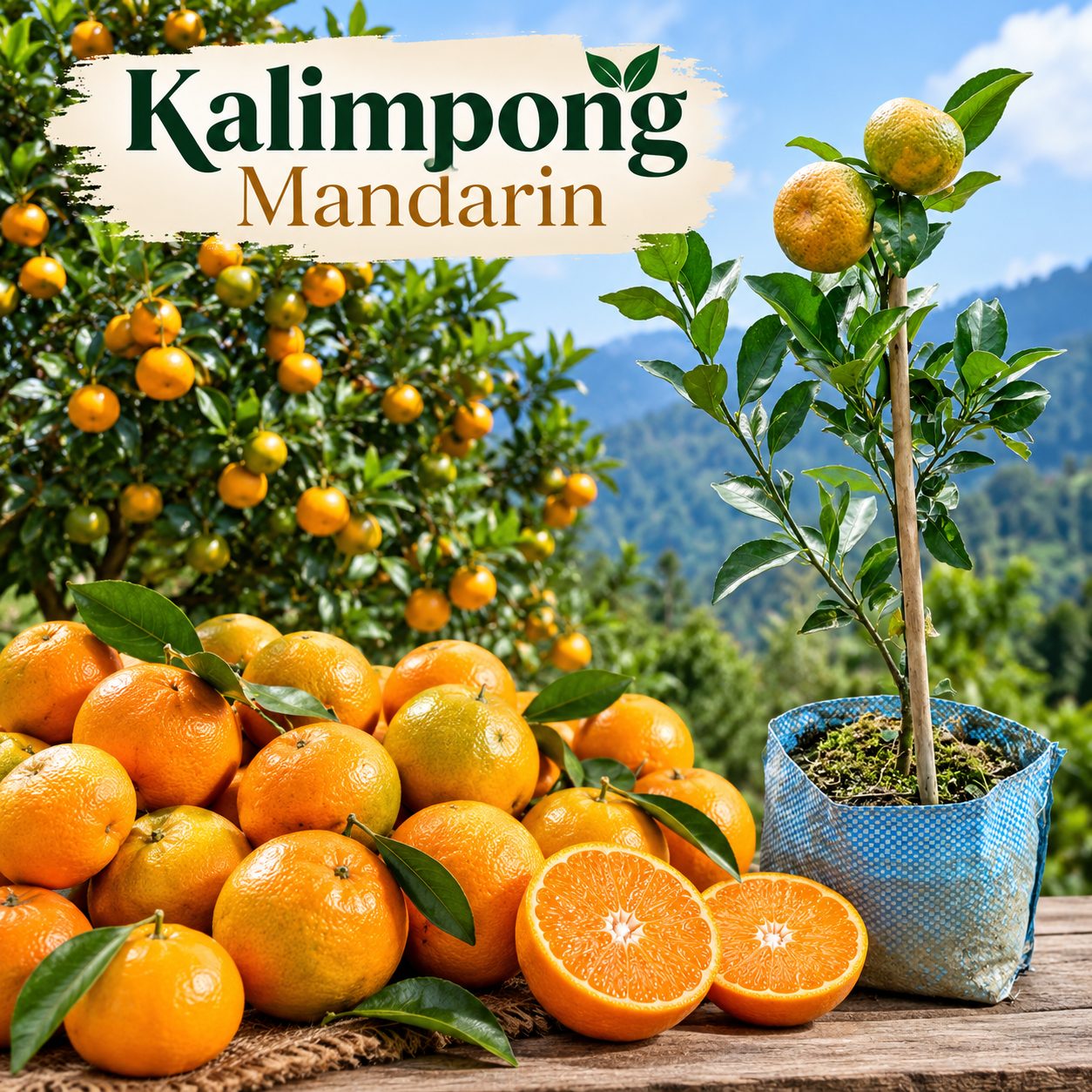
Kalimpong Mandarin Care Protocol
Botanical: Citrus reticulata · Mature orchard height: 10-15 ft
6–8 hours of direct sunlight (morning sun is essential)
5.5 – 6.8 (friable, humus-rich, well-drained soil)
Moderate; keep root zone moist during fruit swell (April–September)
16–20 inch pot or well-drained raised bed
15°C – 32°C (cool winter nights intensify orange rind color)
2–3 years from planting; loose-skin segments with rich aroma
Beginner · Settling, Potting & Water Balance
Establish a fibrous root system for Kinnow, Coorg, Kalimpong & Sittong mandarins.
1. 72-Hour Shade Recovery
Place your sapling in bright indirect light for 3 days after arrival and water with 300 ml plain water.
2. Porous Acidic-Leaning Potting Mix
Combine 40% loamy soil + 30% leaf compost/vermicompost + 20% coarse river sand + 10% cocopeat + 50 g neem cake.
3. Bamboo Stake Support
Mandarin shoots are slender; tie the main stem loosely in a figure-8 loop to a bamboo stake so wind does not rock the young root ball.
4. Mulch with Dry Leaves (Away from Trunk)
Apply a 3 cm mulch of dry leaves or coco chips to keep roots cool, leaving a 5 cm bare ring around the stem.
Advanced · Alternate-Bearing Prevention & Nutrition
Mandarins tend to over-bear one year and rest the next—balance the crop load.
1. Hand-Thinning Heavy Fruit Clusters
Kinnow and mandarins set dense clusters. In May–June, thin out deformed or crowded fruitlets to maintain 1 fruit per 25–30 leaves, preventing branch breakage and alternate bearing.
2. Zinc & Magnesium Foliar Boost
Mandarins quickly show interveinal yellowing (Zinc/Mg deficiency). Spray chelated Zinc + Magnesium (2 g/L) during spring and monsoon flushes.
3. Branch Propping During Fruit Fill
Support fruit-laden lateral branches with forked bamboo props from September onward so heavy fruit clusters do not split the crotch angles.
4. Aphid & Psylla Watch on New Shoots
Inspect tender flush tips weekly; spray Neem Oil (5 ml/L) immediately if curling leaves or psyllids appear.
Expert · Canopy Decline Prevention, Gibberellic Acid & Quality Grading
High-grade orchard management for puffy-rind prevention and uniform size.
1. Preventing Rind Puffiness & Senescence
A foliar application of Gibberellic Acid (GA3 at 10–15 ppm) + Potassium Nitrate (1%) at color-break delays rind puffing and keeps the peel firm on the tree.
2. Calcium & Boron at Petal Fall
Spray Calcium Boron chelate (2 ml/L) at petal fall and 30 days later to strengthen cell walls and eliminate fruit cracking during sudden monsoon showers.
3. Rootstock-Scion Compatibility & Gummosis Care
Inspect the bud union on Rangpur/Carrizo rootstocks every monsoon. Scrape any gum-oozing lesion with a sterile knife and dress with Metalaxyl + Mancozeb paste (2 g/10 ml water).
4. Post-Harvest Light Renewal Pruning
After winter harvest, prune 10–15% of spent fruiting twigs to stimulate fresh spring bearing wood.
Browse Care Guides by Plant Family
Click any variety to load its Beginner, Advanced & Expert protocol
Grapefruit Care Guide
6–8+ hours of warm, direct sunlight · Soil pH 5.8 – 7.0 (deep, fertile, well-drained sandy loam)
Lime/Lemon Care Guide
6–8 hours of direct sunlight (ideal for balconies, terraces & gardens) · Soil pH 5.5 – 7.0 (fast-draining, fertile sandy loam)
Mandarin Care Guide
6–8 hours of direct sunlight (morning sun is essential) · Soil pH 5.5 – 6.8 (friable, humus-rich, well-drained soil)
Mango Care Guide
6–8+ hours of direct daily sunlight · Soil pH 5.5 – 7.0 (slightly acidic to neutral, well-drained loam)
Mosambi Care Guide
6–8 hours of full direct sun · Soil pH 6.0 – 7.5 (well-drained loamy soil)
Root Stock Care Guide
6–8 hours of full sunlight (or 30% shade net in nursery beds) · Soil pH 5.5 – 7.5 (depends on rootstock: Rangpur tolerates alkaline/saline; Carrizo/Swingle prefer 6.0–7.0)
Sweet Orange Care Guide
6–8 hours of direct sunlight daily · Soil pH 6.0 – 7.0 (well-aerated, slightly acidic sandy loam)