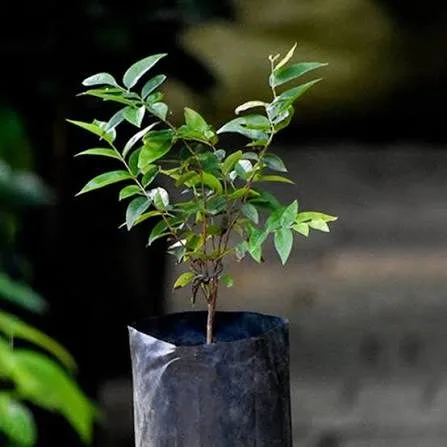
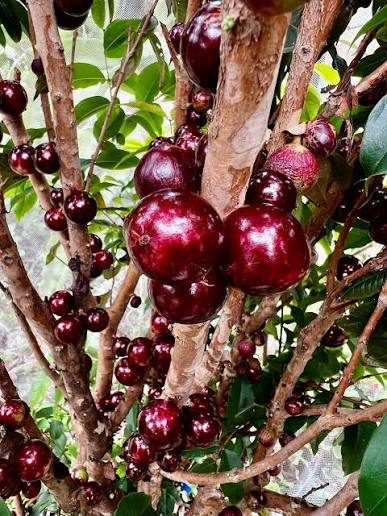
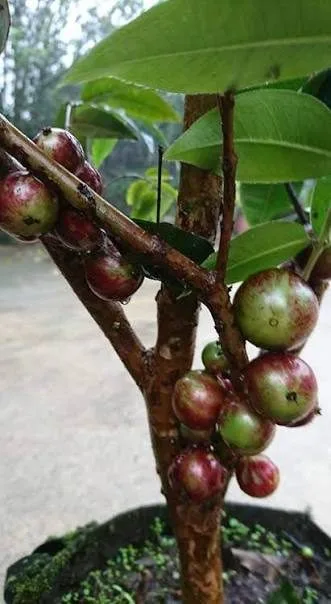
Escarlet
Inclusive of all taxes
100% Healthy Plants
Pan India Delivery
Safe & Secure Packaging
Escarlet Care Guide
Step-by-step Beginner, Advanced & Expert cultivation
Check Doorstep Delivery Availability
Enter your 6-digit pincode to verify courier serviceability.
About Escarlet
Sweet & Aromatic
Delicious flavourful fruits
High Yield
Produces more fruits in less time
Early Fruiting
Starts fruiting in 2-3 years
Disease Resistant
Strong plant with better resistance
Escarlet Care Guide
Botanical classification: Mangifera indica · Select your experience level below
6–8+ hours of direct daily sunlight
5.5 – 7.0 (slightly acidic to neutral, well-drained loam)
Deep watering every 4–6 days in summer; reduce in winter dormancy
Start in 14–16 inch (35–40 L) UV-stabilized grow bag or terracotta pot; upgrade to 24 inch / 100 L drum or ground
24°C – 35°C (protect young saplings below 8°C)
Grafted saplings can flower in year 1, but allow fruit set from year 2–3 for strong trunk framework
Beginner · Unboxing, Potting & First 90 Days
Essential steps to settle your grafted mango sapling without transplant shock.
1. 4-Day Nursery Acclimatization
Unbox immediately upon delivery. Water the root ball gently with 300–400 ml water and keep the sapling in bright, filtered shade (veranda or under 50% shade net) for 3–4 days before moving to direct sun.
2. Ideal Potting Mix & Drainage
Use 50% garden loam + 25% well-rotted cow dung/vermicompost + 20% coarse river sand + 5% neem cake (100 g) and 50 g single super phosphate (SSP). Never use heavy clay that holds stagnant water.
3. Keep the Graft Union Above Soil
Locate the swollen graft tape/scar on the stem (15–25 cm above the base). Plant at the exact nursery soil line so the graft union stays at least 10 cm above the soil surface. Remove any shoots emerging below the graft.
4. Finger-Test Watering Rule
Water only when the top 2 inches of soil feel dry to the touch. Over-watering is the #1 cause of root rot in young mango saplings.
Advanced · Canopy Shaping, Nutrition & Flowering
Build a bushy, multi-branched framework and manage seasonal flushing.
1. 3-Tier Formative Pruning (Tipping)
Once the main stem reaches 60–75 cm height, pinch or prune the terminal tip just above a node to encourage 3–4 strong primary scaffold branches. Repeat after each second vegetative flush to create a compact, sunlit canopy.
2. First-Year Blossom Removal (De-blossoming)
Grafted mangoes often push panicles in their first Jan–Feb season. Pinch off flower panicles in Year 1 and Year 2 so all carbohydrates go into root volume and stem caliper.
3. Split Seasonal Feeding Schedule
Feed in June–July (post-monsoon onset) and October: 2–3 kg vermicompost + 150 g neem cake + 50 g bone meal + 15 g micronutrient mixture (Zn, B, Fe) in a ring trench 15 cm away from the trunk.
4. Pre-Flowering Moisture Stress
Withhold or reduce watering from mid-November to late December to induce floral bud differentiation, then resume light irrigation once panicles reach pea-stage.
Expert · High-Density Orchard, Brix & IPM Protocol
Commercial-grade precision for maximum fruit set, sugar (TSS), and pest control.
1. Foliar Boron & Potassium for Fruit Set & TSS
Spray Solubor (Boron 20%) at 1.5 g/L at bud-break to boost pollen tube germination. At marble and egg stages, foliar-spray 00:52:34 (5 g/L) followed by 00:00:50 (Potassium Sulphate, 5 g/L) 30 days before harvest to maximize Brix and pulp color.
2. Targeted IPM (Hopper, Thrips & Anthracnose)
Before panicle emergence, spray Azadirachtin 10,000 ppm (2 ml/L). For anthracnose and powdery mildew during humid bloom, apply Carbendazim + Mancozeb (2 g/L) or Copper Oxychloride (2.5 g/L) before flowers open—never spray harsh insecticides during full bee activity.
3. Fruit Thinning & Pre-Harvest Bagging
Retain 1–2 healthy fruits per panicle (especially on large-fruited varieties) and enclose fruits in dual-layer brown paper bags 45 days before harvest to prevent fruit fly stings, sunburn, and latex staining.
4. Post-Harvest Center-Opening Prune
Immediately after harvest (June–July), remove diseased, criss-crossing, and inward-growing shoots to allow 70%+ sunlight penetration into the interior wood for next season’s bearing shoots.
Log in to write a review.
No reviews yet. Be the first to review this plant!
You May Also Like
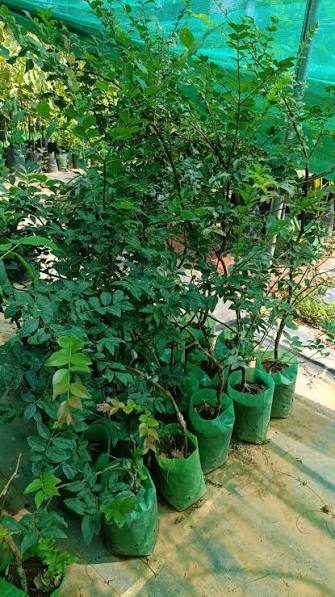
Frequently Bought Together
Sabara
₹780.00

Red Hybrid
₹950.00
Pan-India Delivery
Safe doorstep courier
Ventilated Crates
Saplings arrive healthy
100% Grafted
True-to-type varieties
3-Tier Care Guides
Beginner to Expert